


Why “Requirements” Fail Before a Single Line of Code Is Written
Most complex projects don’t fail because of bad engineers. They fail because nobody truly agreed on what they’re building. In SaaS, industrial automation, or defense, I often see the same pattern:
- A founder or business leader has a strong vision.
- Product owners and business analysts turn that into a backlog.
- Engineers receive tickets that look “detailed” but still leave too much room for interpretation.
The result: rework, delays, and systems that technically “work” but don’t fully solve the real problem. My work as The Mr. CTO often starts here, in the gap between business intent and buildable system design.
The Missing Role: A Practical Blend of Product, BSA, and Architect
Traditional roles each cover a part of the puzzle:
- Product Owner focuses on value, priorities, and the roadmap.
- Business Systems Analyst (BSA) maps processes, rules, and data.
- Architect designs how the system behaves and scales.
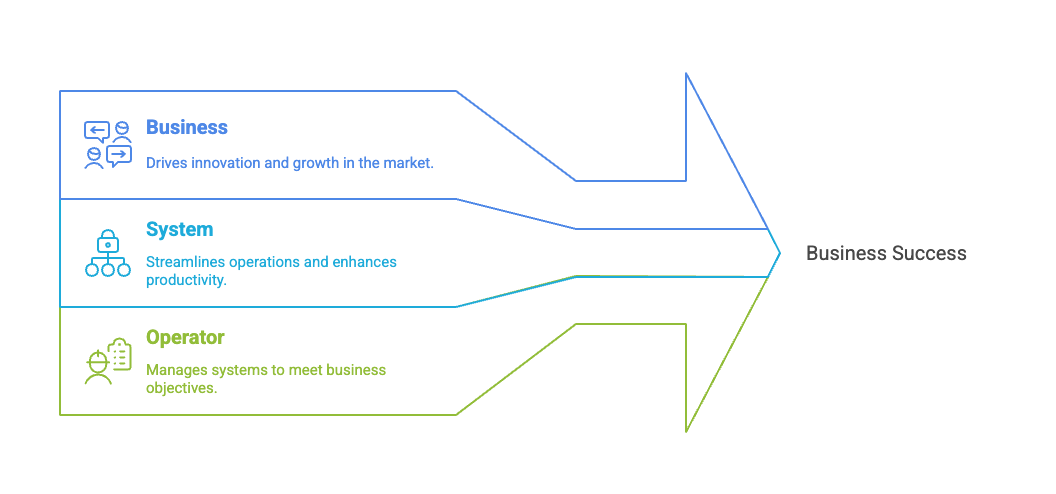
On complex, mission-critical projects, these roles are often fragmented across people, vendors, and time zones. What’s missing is someone who:
- Understands the business language of the founder or executive.
- Can translate it into structured requirements and flows.
- And then shapes those into an architecture that engineers can reliably build.
That “blend” is where I operate as a fractional CTO and product/architecture partner.
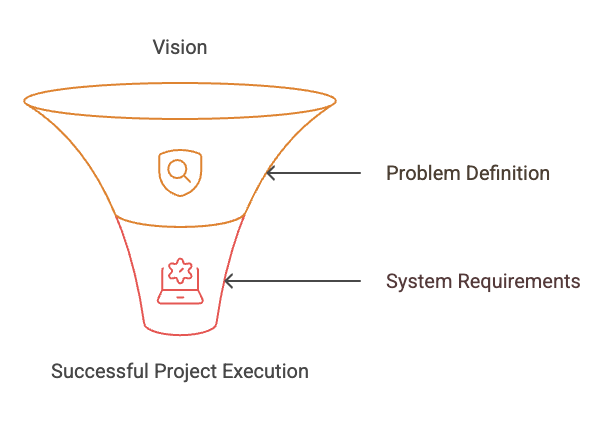
Step 1: Start with the Real Problem, Not the Feature List
Most requirement documents start with “We need a dashboard,” “We need an app,” or “We need a portal.” I start with a different set of questions:
- What decision needs to be made faster, safer, or with more confidence?
- What failure are we trying to prevent?
- Who is actually going to use this and under what conditions?
- What happens today without this system — and where does it break?
This usually happens through structured conversations and simple sketches, not long workshops filled with jargon. Deliverable: A concise problem statement and context document, written in plain language that both the CEO and the engineering team can agree on.
Step 2: Map the Flows Before Writing “Requirements”
Before we talk about user stories or technical specs, I map the flows:
- User flows: how different users move through the system.
- Data flows: how information moves between modules, devices, or external systems.
- Operational flows: what happens behind the scenes (alerts, approvals, escalations).
For industrial or defense projects, this often includes physical components and real-world constraints: sensors, controllers, operators, and safety procedures. I keep these diagrams intentionally simple. They’re not for decoration; they’re working tools to align everyone on “what actually happens.” Deliverable: A set of high-level flow diagrams that become the backbone of all further documentation.
Step 3: Translate Flows into Structured Requirements
Once flows are clear, we can safely talk about “requirements.” Here’s how I structure them:
- Functional requirements
- What the system must do, from the user’s and operator’s perspective.
- Written in clear, testable language.
- Non-functional requirements
- Performance, reliability, security, compliance, safety.
- In industrial and defense contexts, this is where the real risk lives.
- Constraints and assumptions
- Legacy systems that must stay.
- Hardware limitations.
- Regulatory boundaries.
- Interfaces and integrations
- What the system must talk to (APIs, PLCs, sensors, third-party services).
- What data is exchanged, and how often.
This is where my background as a CTO, architect, and product partner becomes practical: I’m not writing “wish lists.” I’m writing requirements that can be directly used to design architecture, plan sprints, and validate outcomes. Deliverable: A requirements document that’s structured, versioned, and understandable by both business and engineering.
Step 4: From Requirements to Architecture That Can Survive Reality
Good documentation isn’t the end goal. It’s the bridge to a system that works under pressure. Once requirements are stable enough, I move into architecture:
- System boundaries: what’s inside your product vs. what should stay external.
- Service decomposition: where to split modules/services, and where not to.
- Data and event models: how information is stored, moved, and reacted to.
- Failure handling: what happens when things go wrong — not if, but when.
For SaaS, this might mean a cloud-native architecture that can scale without collapsing.
For industrial or defense, it might mean robust, redundant systems that can operate in constrained environments. Deliverable: Architecture diagrams, key decisions, and rationale — all linked back to the original requirements.
Step 5: Documentation That People Actually Use
Documentation is only useful if people use it when:
- Planning sprints.
- Making trade-offs.
- Onboarding new team members.
- Making changes months later.
To make that happen, I structure documentation so it’s:
- Layered: high-level overviews first, details underneath.
- Traceable: every feature or component can be traced back to a requirement and a business need.
- Living: updated as decisions change, not frozen in a forgotten PDF.
This reduces “tribal knowledge” risk and makes your system less dependent on a few key individuals.
When This Approach Is Most Valuable
This blended product–BSA–architecture role is especially useful when:
- You’re about to start a complex build (or rebuild) and can’t afford a failed first iteration.
- You have multiple vendors or teams and need a single source of truth.
- Your engineers keep asking for clarity, and your business team keeps saying, “We already explained this.”
- You operate in regulated, safety-critical, or high-stakes environments where ambiguity is expensive.
In other words: when you need more than just “tickets,” you need a clear, shared understanding of the system you’re building.
How I Work with Founders and Teams
In practice, an engagement around requirements and documentation with The Mr. CTO usually looks like:
- Discovery (1–2 weeks)
- Conversations with founders, product, operations, and key engineers.
- Review of existing docs, diagrams, and systems.
- Flows & Requirements (2–4 weeks)
- Map flows, define requirements, and clarify constraints.
- Iterate quickly with stakeholders to remove ambiguity.
- Architecture & Delivery Plan (2–4 weeks)
- Design system architecture aligned with your constraints and goals.
- Prepare a delivery roadmap that your teams or vendors can execute on.
After that, I can stay involved as a fractional CTO to keep requirements, architecture, and delivery aligned — or hand over a structured package your team can run with.
If you’re sitting on a complex product idea — or already in a project where requirements feel vague and documentation is scattered — this is exactly where I can help. I work with founders and leaders in SaaS, industrial, and defense to turn vague ideas into clear, buildable systems. Interested in getting your requirements and documentation under control?
Use the contact form on The Mr. CTO to request a short, focused review of your current plans and documentation. We’ll identify the gaps, and you’ll leave with a clear next step — whether we work together or not.


